I had only planned a day trip from Da Nang to Hue, which was the imperial capital of Vietnam from the 19th century until the mid 20th century. Now that I’ve been there, I think a day trip is too short and Hue deserves a proper visit of 2 to 3 days to really take in its ancient history and culture. So this trip will have to be a first impression for me.
The trip to Hue was rather eventful as the weather decided to turn against me. After a hot and humid day before, it suddenly started to rain continuously on the day I was to make my trip to Hue. The distance from Da Nang to Hue is roughly more than a 100 km and I was quite hopeful that there will be no rain by the time I reached Hue. Unfortunately, it seems that this was no ordinary rain storm but a tropical depression covering a large part of central Vietnam. It would continue to rain for the next 2 days.
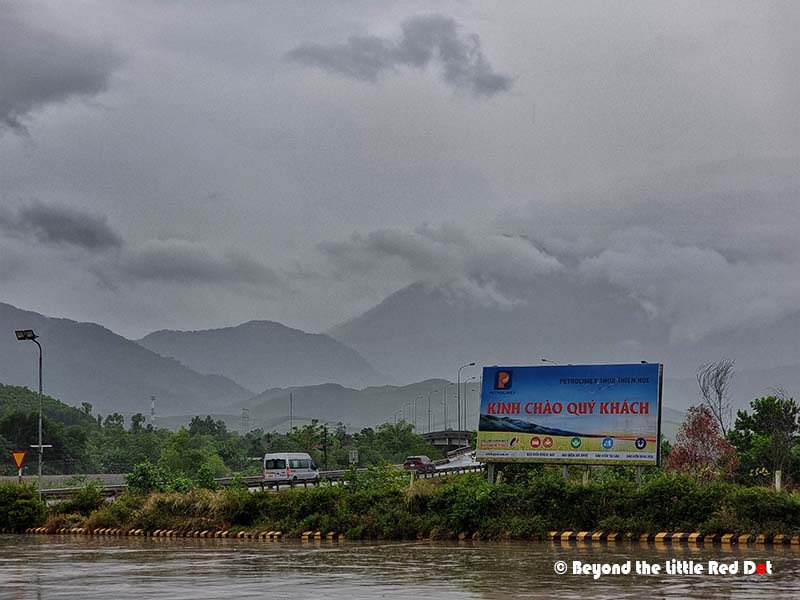
After a 2.5 hour ride through the rain, we finally arrived at Hue. The rain continued throughout the day and it looked like it was going to be a very wet day ahead.
Hue has had a long history, but it’s more well known during the period of the Nyugen dynasty from 1802 until 1945 when it became the imperial city capital of Vietnam.
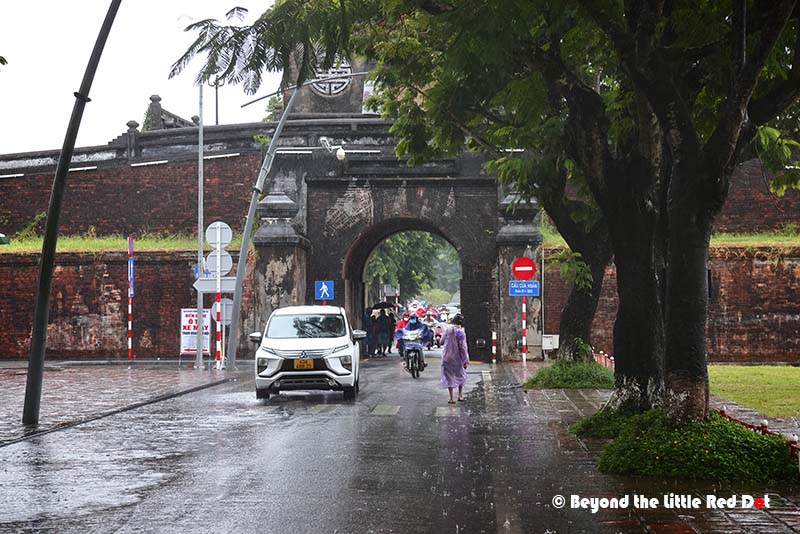
Because of the rain, it was rather inconvenient to look for the ticket booth. Otherwise, it would have been nice to walk around to explore the walls and gate before entering the citadel itself.
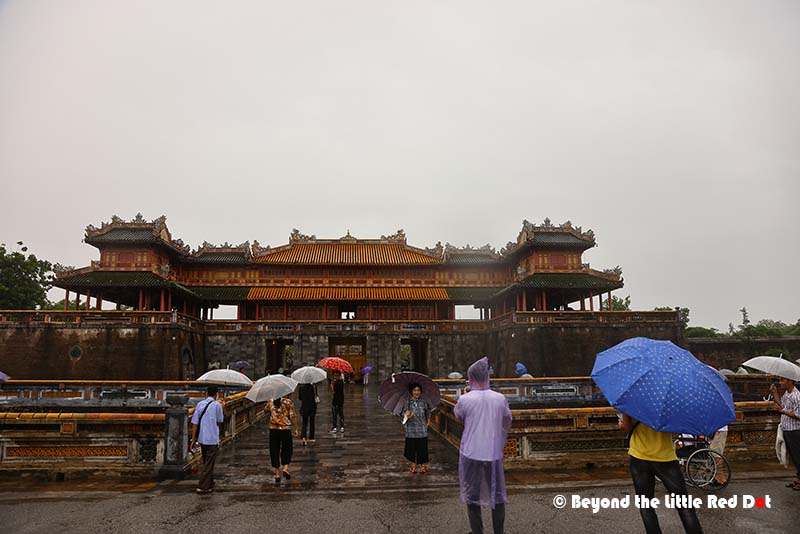

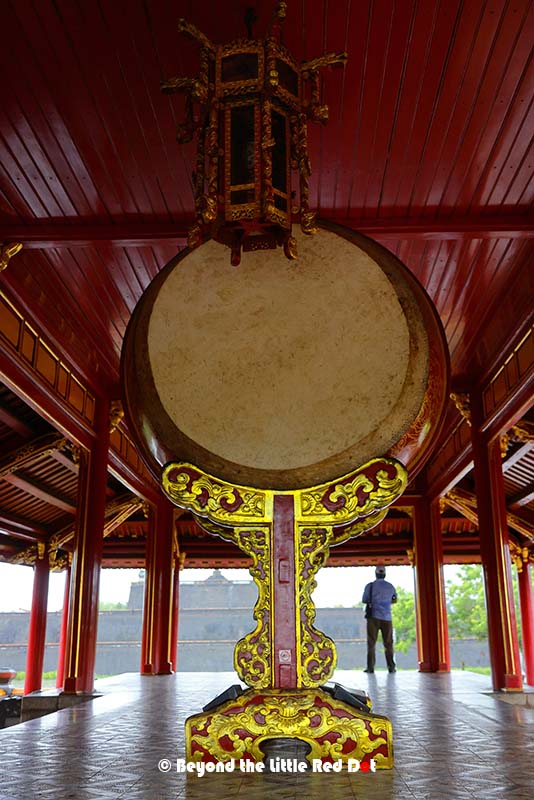

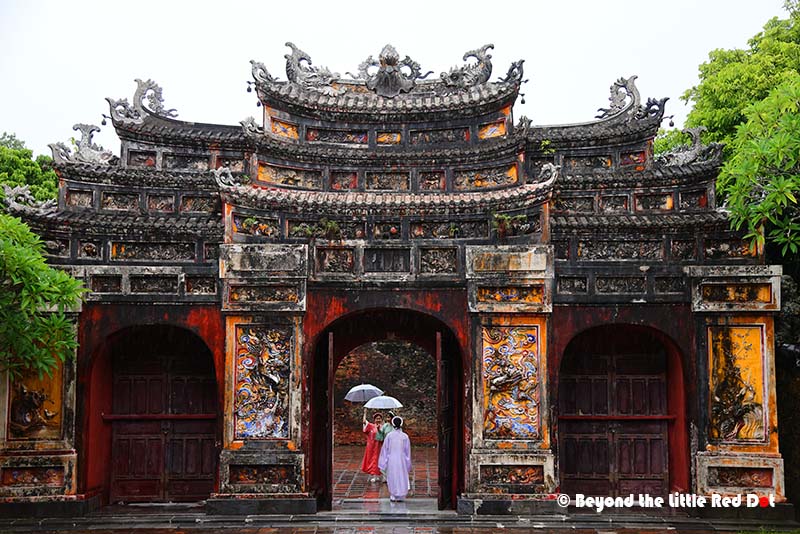
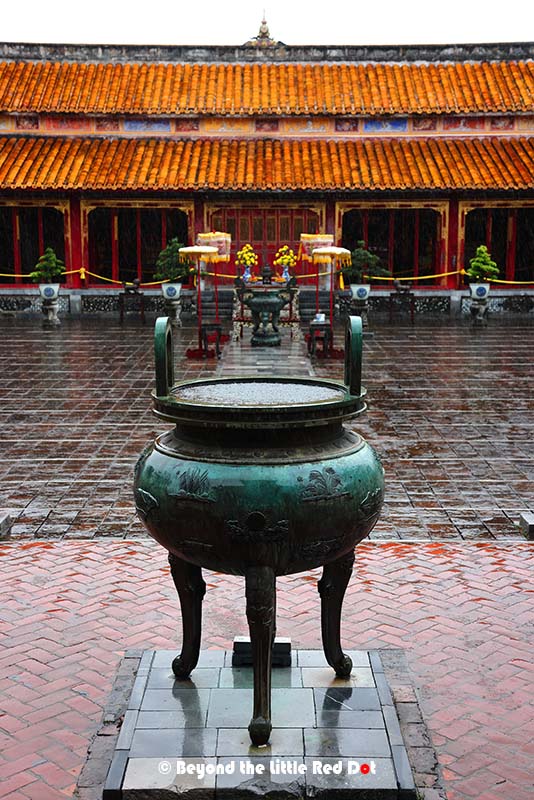
After about less than an hour I decided that I should leave the citadel. If the weather was good I would have loved to stay and explore further, but the incessant rain made things difficult moving around in a poncho and fogging up my camera’s lenses.
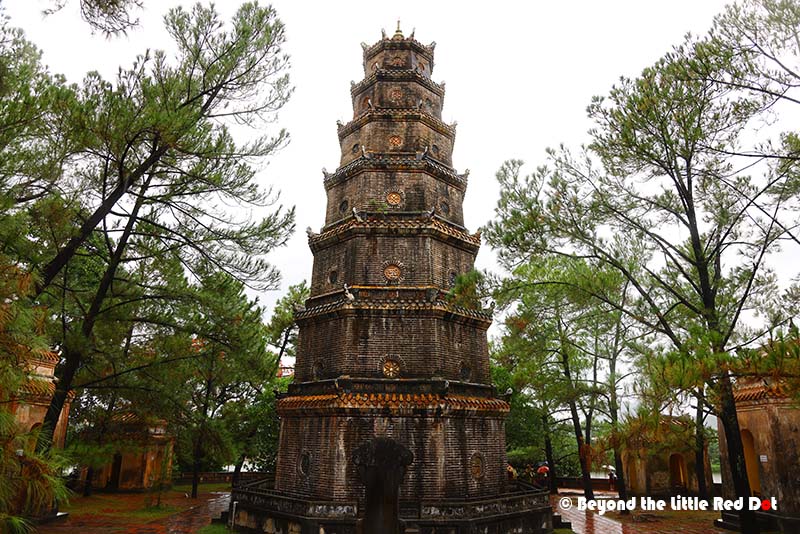
The first pagoda was built in 1601 and legend has it that an old woman appeared on the hill where the pagoda stands and told the villagers that a Lord will come and build a pagoda there for the country’s prosperity. Lord Nyugen Hoang who happened to pass by the hill heard the legend and decided that he was to be the one who built the pagoda. The initial pagoda was more of a small temple, and the tall structure that we see now was actually built in 1884.

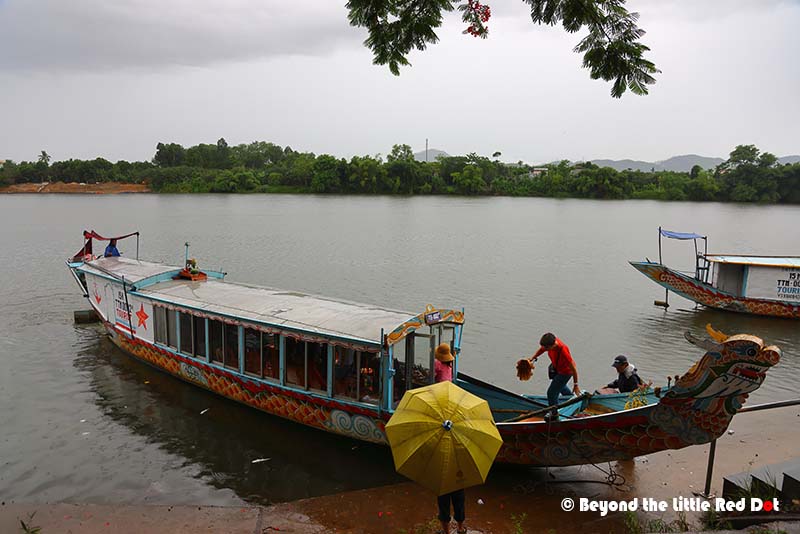
After the short visit to Thein Mu Pagoda, it was time to visit my last stop of the day which was one of the tombs of Hue’s various emperors. There are several tombs of emperors scattered over the area and to visit them all would take the whole day. I had not really chosen which tomb to visit but my driver/guide decided to take me to the most well known one.
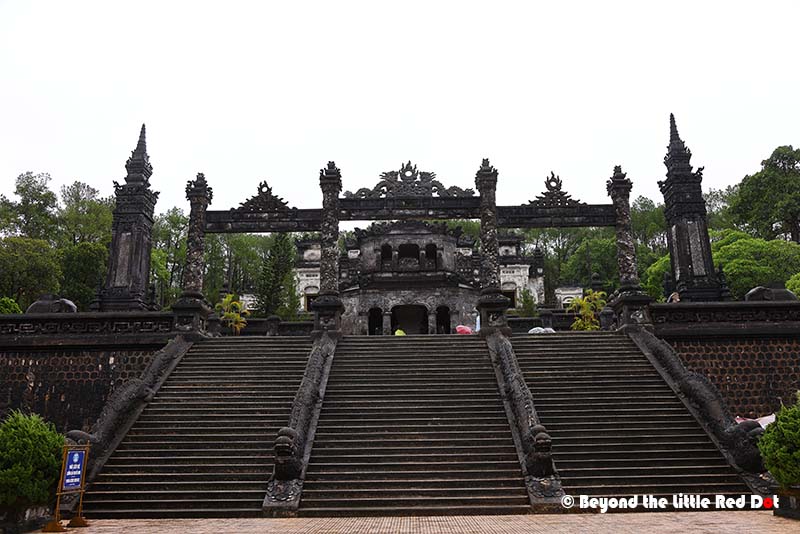


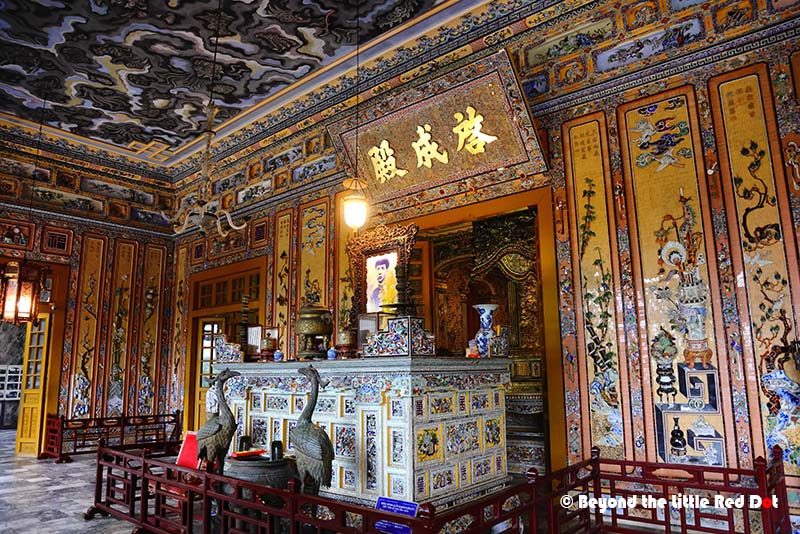


I was only able to cover these few places given the short time in a day trip. It would take at least 2 to 3 days to cover the imperial citadel and most of the emperors’ tombs, some of which are quite large.
Barring the rain, I realized from this first visit that a day isn’t enough to fully appreciate Hue. Besides the historical attractions, Hue is also famous for its food and there’s lots of restaurants and a food street where you can eat your fill. As the former imperial capital, Hue cuisine combines both taste and aesthetics. I only got a small taste of it during my quick lunch sheltering from the rain at Madam Thu, a highly recommended restaurant in Hue.
Getting to Hue from Da Nang
I hired a car with driver for the day trip at a rate of VND 1.9 million. If you are planning to stay in Hue and don’t need a return trip to Da Nang, then a good choice would be to take the train. It takes 2.5-3 hrs for the train trip and is a good way to travel in a more relaxed mood. Details of the trains and timetable can be found here.

 Beyond the Little Red Dot
When I stayed in Hue, the weather was mostly sunny. But exactly because of that, I remember it was very hot — even for me who is used to the heat and humidity of Jakarta. When I went in 2017, the facade of Khai Dinh’s tomb had actually looked blackened.
So I guess the blackened state has been like that for years already.
These are some inspiring shots of Hue, Edwin ~ and the inspiration of rain as well coming down on you. I’d love to visit for the taste of the culture and its cuisine.
You should definitely visit. I’m already thinking of a return trip to see what I missed.