One of my reasons for driving the Mae Hong Son Loop was to visit Ban Rak Thai, a small village nestled in a valley right beside the Thailand-Myanmar border. This is a village like no other in Thailand. Coming here is like stepping into Yunnan with its Chinese style houses, red lanterns, and tea plantations.
A Village Born from Exile
Ban Rak Thai, also known locally as Mae Aw, was founded in the mid-20th century by former Kuomintang (KMT) soldiers from Yunnan Province, China, who fled across the border after the Communist victory over the Nationalists in 1949. These soldiers and their families settled in the remote hills of Mae Hong Son, establishing a self sufficient community far from home.
For decades, the village remained a military outpost, with its residents living off the land and, in some cases, opium cultivation. In the 1980s, the Thai government encouraged the community to shift to tea farming as part of a royal development project, turning the surrounding slopes into terraced tea plantations. In a symbolic gesture of loyalty, the village was later renamed Ban Rak Thai, meaning “Village of Those Who Love Thailand,” reflecting its deep gratitude for the refuge it had been given.
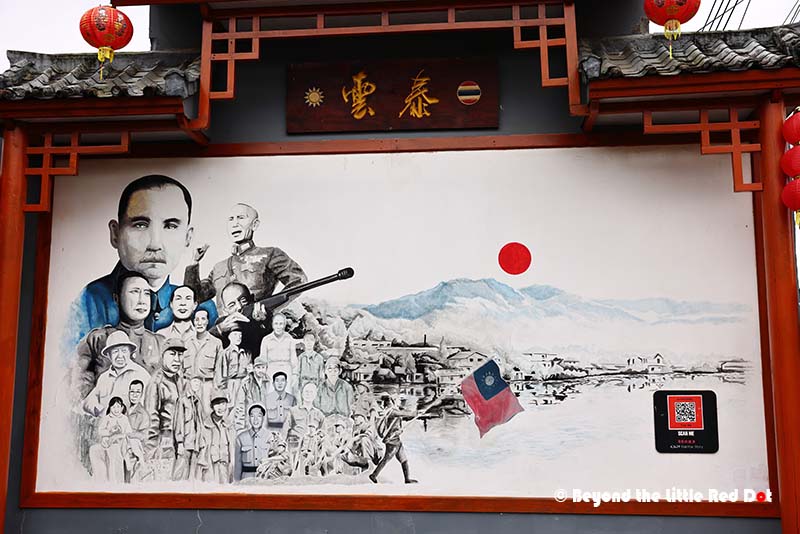
There are many Chinese villages formed from the migration of ex-KMT soldiers and their families along northern Thailand like Santichon Village in Pai and Mae Salong in Chiang Rai which I’ve visited before. But none are as culturally unique as Ban Rak Thai.
Ban Rak Thai Today: A Quiet Life by the Lake
Today, Ban Rak Thai is a peaceful, slow-paced destination that blends Thai and Yunnanese cultures in an unique way. The village is still dominated by descendants of the original KMT settlers, many of whom speak Yunnanese accented Chinese and maintain Chinese-style homes with red lanterns, wooden carvings, and tiled roofs.
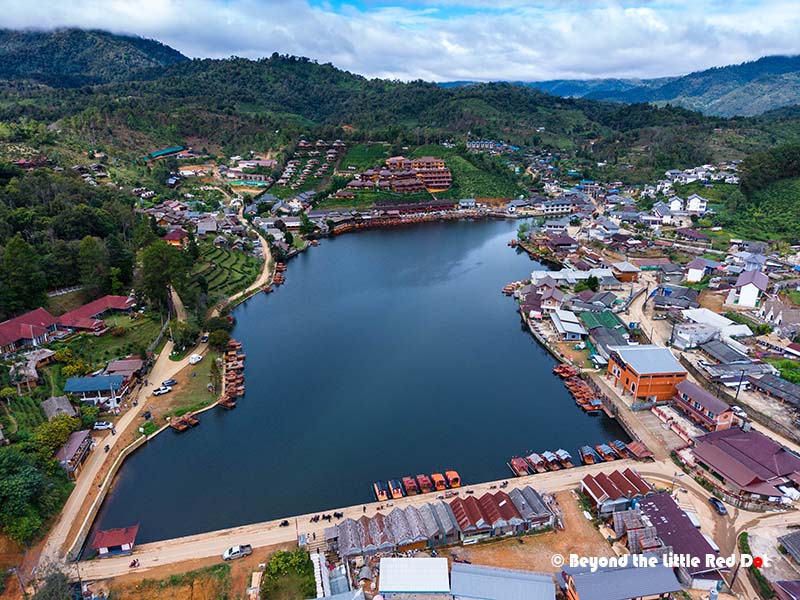
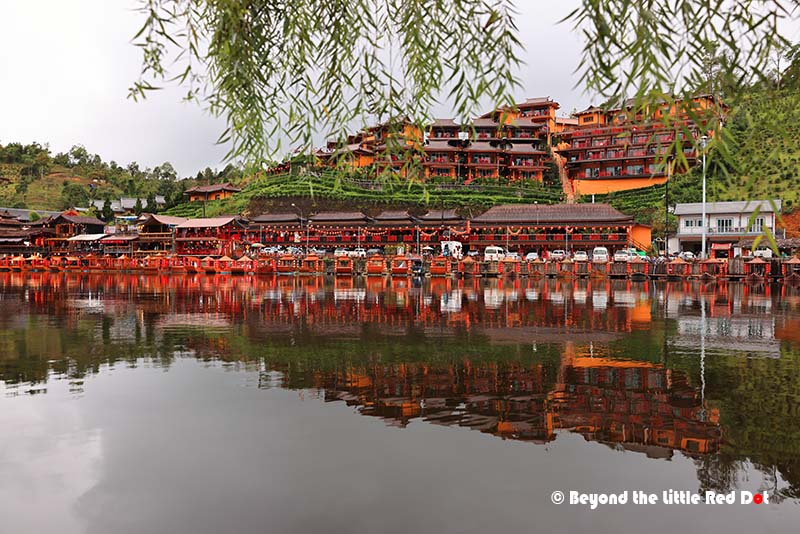
While tea plantations served as one of the economic pillars of the village, I can see that tourism is becoming an equal if not bigger cash cow. There is a frenzy of construction activity for new hotels on the slopes of the surrounding hills. As a pleasant surprise, fruit wines are also made here from locally grown plums, berries and pineapples. I had to buy a bottle to try.
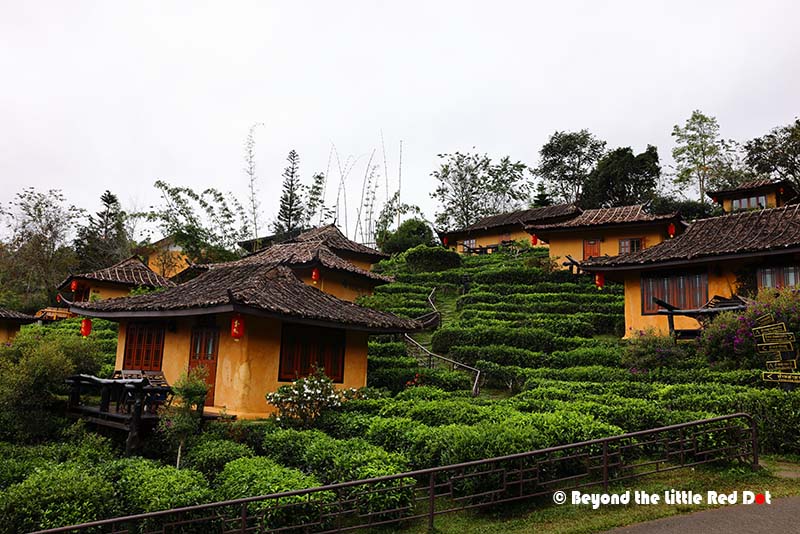
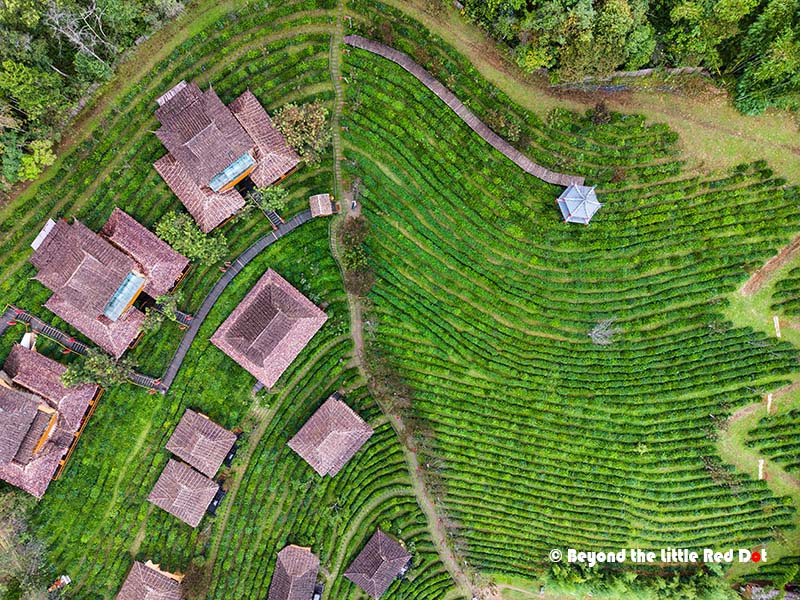
Many of the tourists who come usually stay a night or are day visitors from Mae Hong Son City. I can see that the crowd comes in the late afternoon for check-in to their hotels and by 11.00 am the next day, they’ve checked out and left. So if you time your visit right, you can avoid the crowds. Ban Rak Thai is also relatively unknown to international tourists, and I observed that more than 90% of the visitors are local Thais. For ourselves, we stayed for 2 nights which allows time for a more leisurely visit.
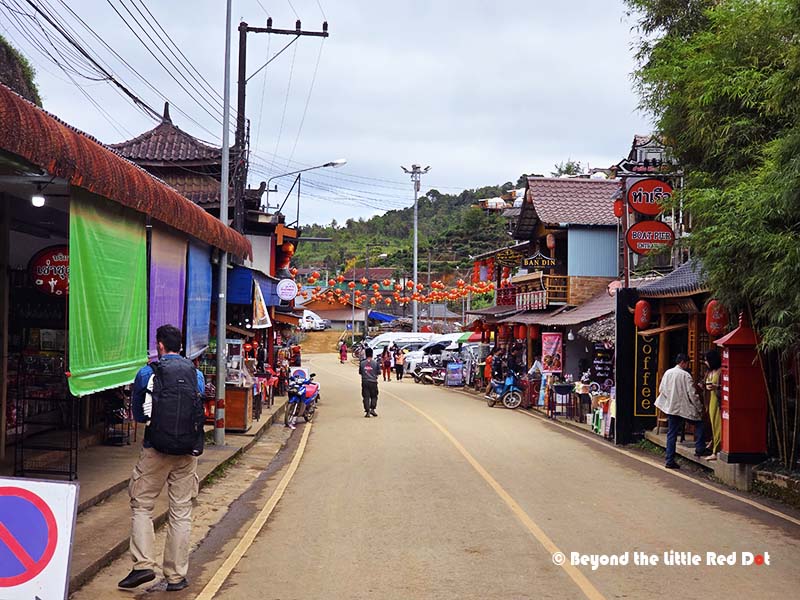
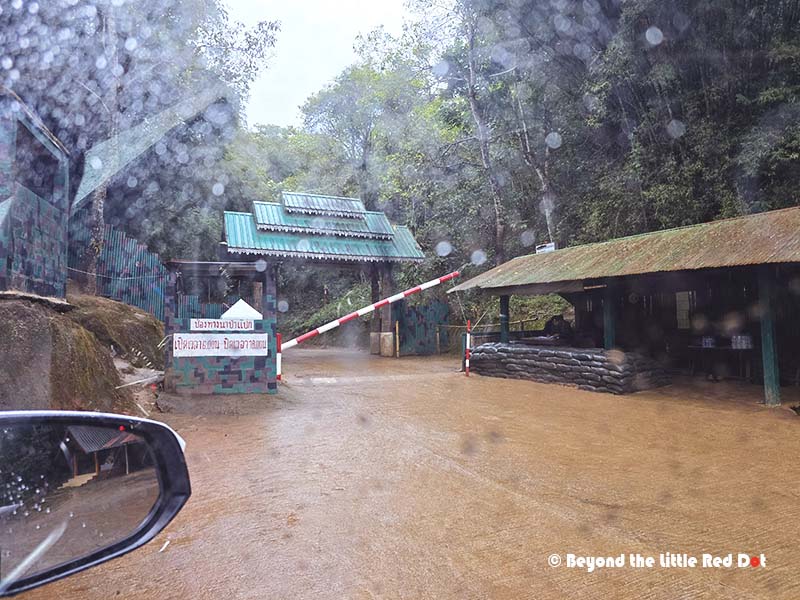
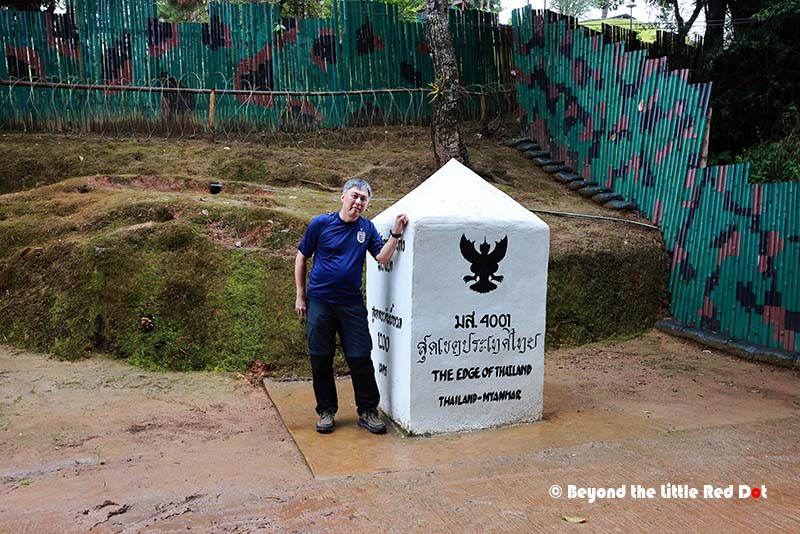
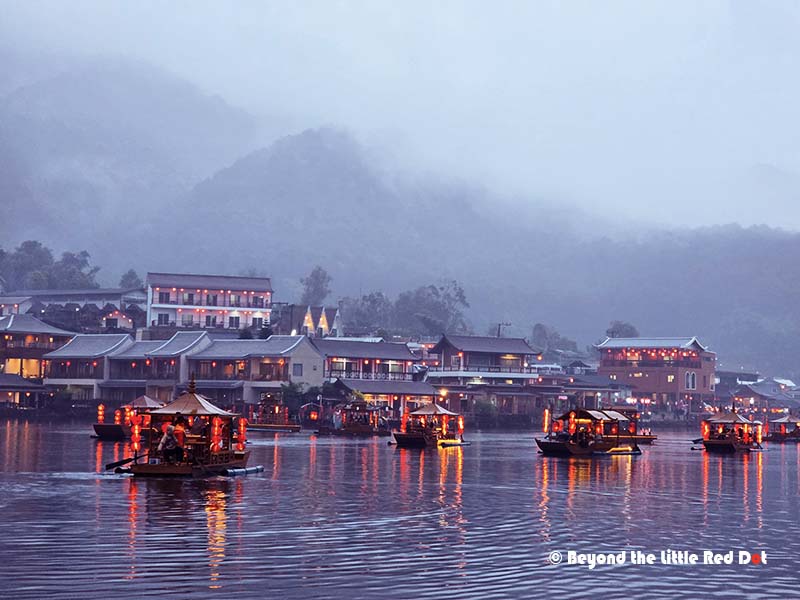
I would recommend to stay at least 1 night in Ban Rak Thai. Night time is when the ethereal beauty of Yunnan comes to life, as lanterns light up the Chinese style houses and cast colourful reflections onto the lake.
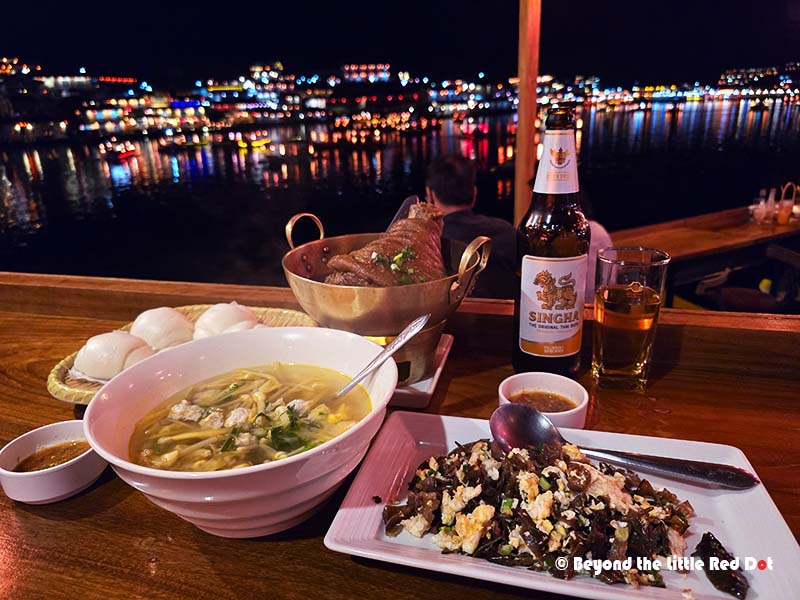
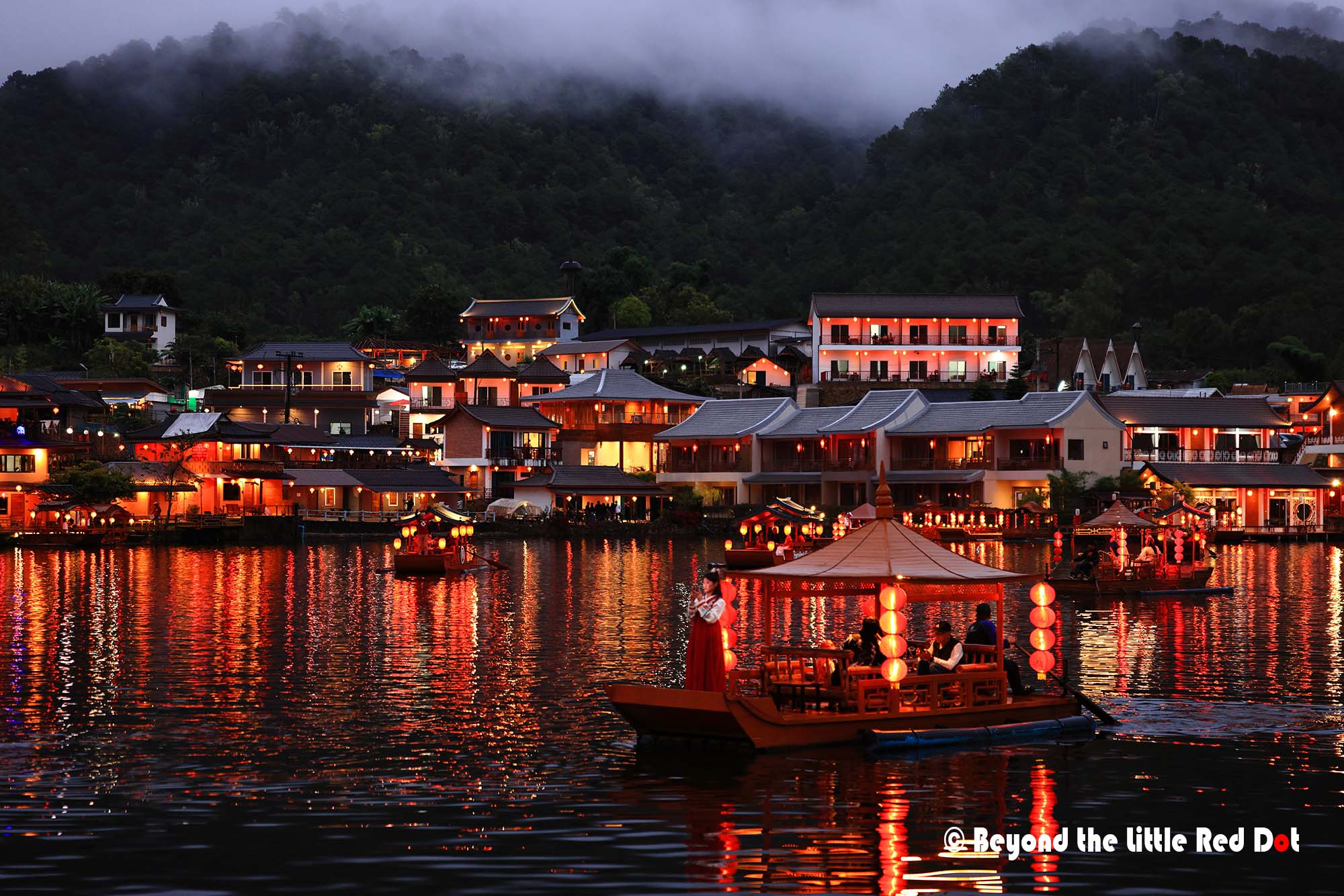

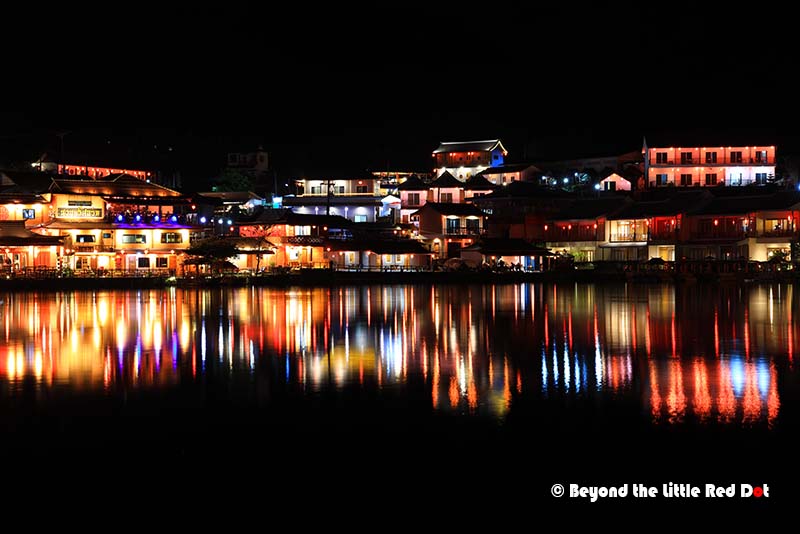
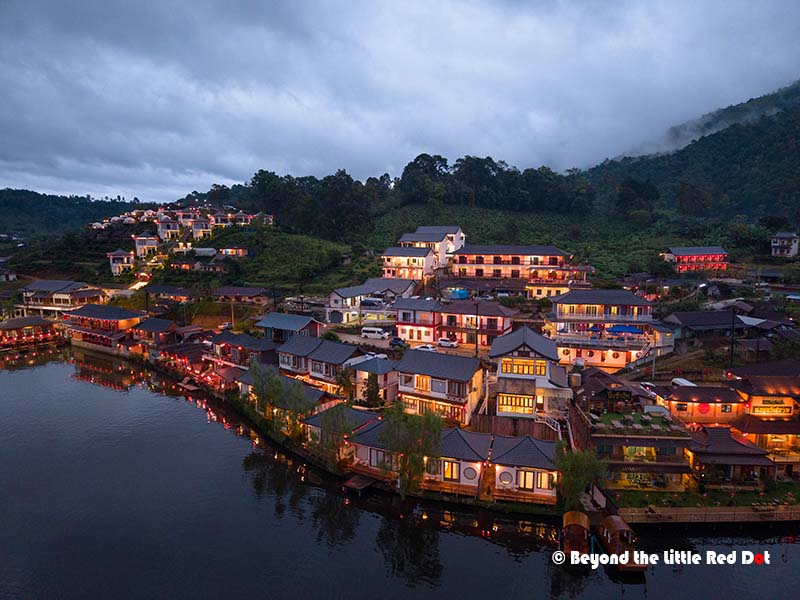
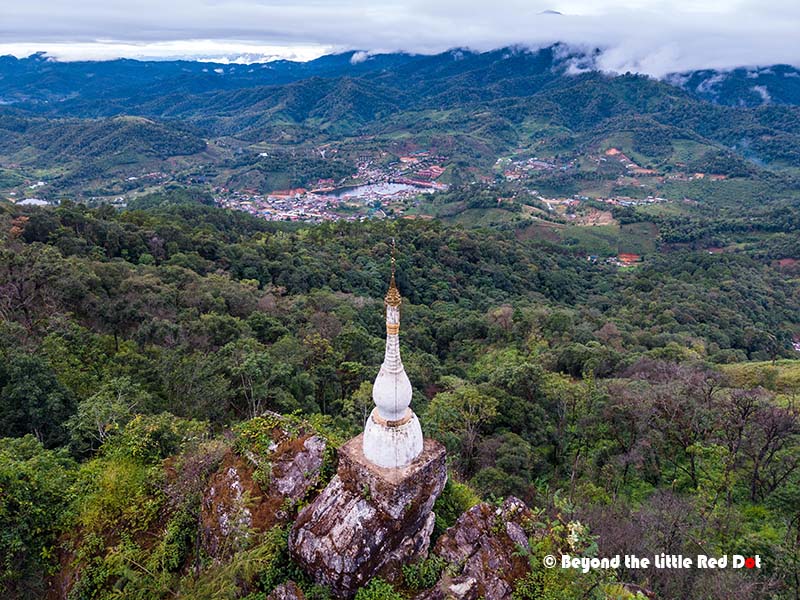
If you think that Ban Rak Thai is all about lazing by the lake side while sipping tea and fruit wine, you can also go on a hike to visit a Buddhist shrine up on top of a hill near the Thai-Myanmar border. It takes about an hour to make your way up there.
Tips on Visiting Ban Rak Thai
If you are an international tourist, bring cash! Shops, hotels and restaurants here don’t accept credit cards, and there are no ATM’s or banks. The nearest ATM/bank is in Mae Hong Son City which is 1 hour’s drive away. Locals can pay using QR codes through their phones, so unless you have a Thai bank account, cash is king. We found out the hard way when we almost ran out of cash and had to ration our spending until the last day when we left.
Although there are many hotels, guest houses and home stays, not many of them are listed in hotel booking websites like Agoda or Expedia. Most of them only have direct phone or messaging on Whatsapp, Line or Facebook. Payment is also by cash or bank transfer which can be risky or a pain if you are an international tourist due to bank transfer fees.
Driving or motor-cycling is the only way to get to Ban Rak Thai. The nearest transport hub is Mae Hong Son City which has a domestic airport. Tours from Mae Hong Son City are the most convenient with travel times of 1 hr. Otherwise, tours also leave from Pai, but this a 2.5 hr drive.
We visited in November which is the peak season (Nov-Jan) for tourism in northern Thailand due to the cool weather during this time of year. This is also the dry season with sunny days and cool nights. There isn’t much rain if any making it easy to plan activities. Although during my visit, a cold front coming south from China created some erratic weather with clouds and drizzles.

 Beyond the Little Red Dot