My first trip to Hanoi was a family holiday in 2011, a breeze through the the Old Quarter, a cruise on Ha Long Bay and the pilgrimage to the Perfume Pagoda. Like most family trips, it was planned around everyone’s needs, and Hanoi itself was mostly a stopover between excursions. There were sights I walked past, and some I never got to at all.
This time, Hanoi was the gateway to a photography trip through northern Vietnam in September 2026. That gave me the chance to linger, to wait for the light on Long Bien Bridge, finally step inside the Imperial Citadel, and head out into the countryside to photograph the craft villages that have supplied the capital for generations.
This is the first post of my series from this trip to the northern mountains of Vietnam comprising Sapa, Mu Cang Chai and Long Coc.
Long Bien Bridge: Sunset Over the Red River
Long Bien Bridge was built by the French between 1898 and 1902 and was, at the time, one of the longest bridges in Asia at roughly 2.3 km in length. Originally named after Governor-General Paul Doumer, it was the only link across the Red River into Hanoi for decades. During the Vietnam War it was bombed repeatedly by American forces. Destroyed and rebuilt several times, its patched, mismatched spans are a record of that history. Today it carries only trains, motorbikes, bicycles and pedestrians, with the old rusting steelwork standing as a symbol of the city’s resilience.
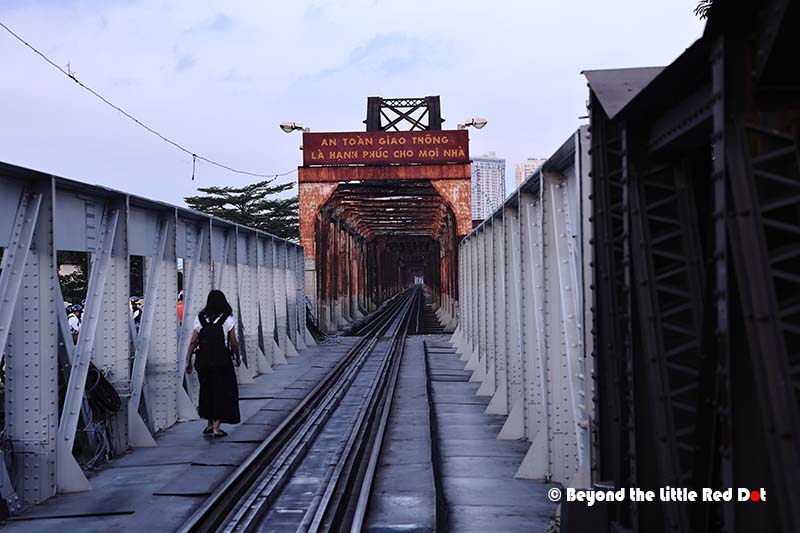
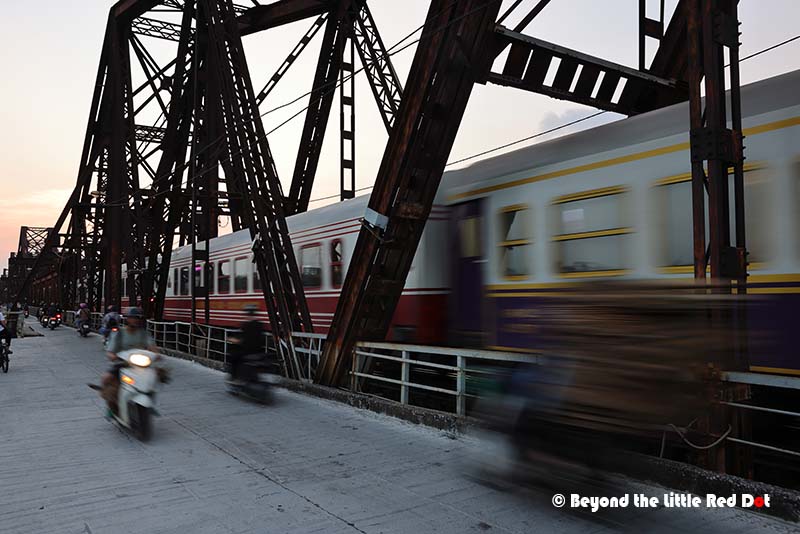
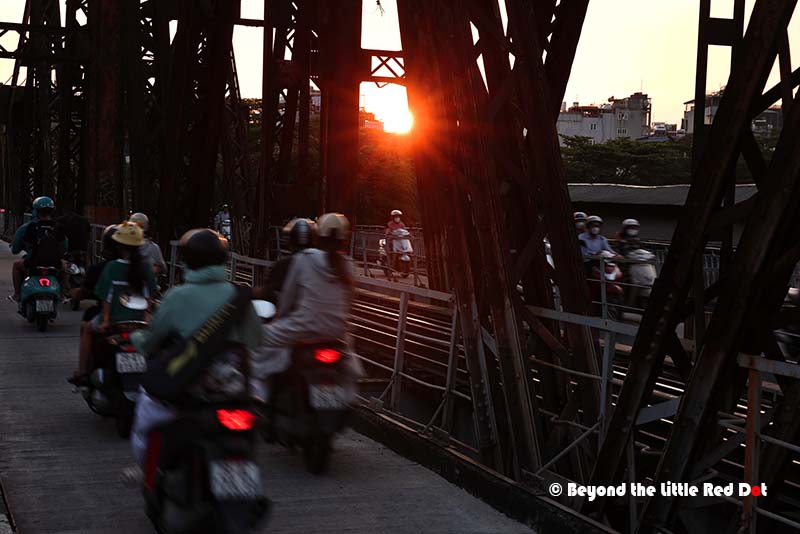
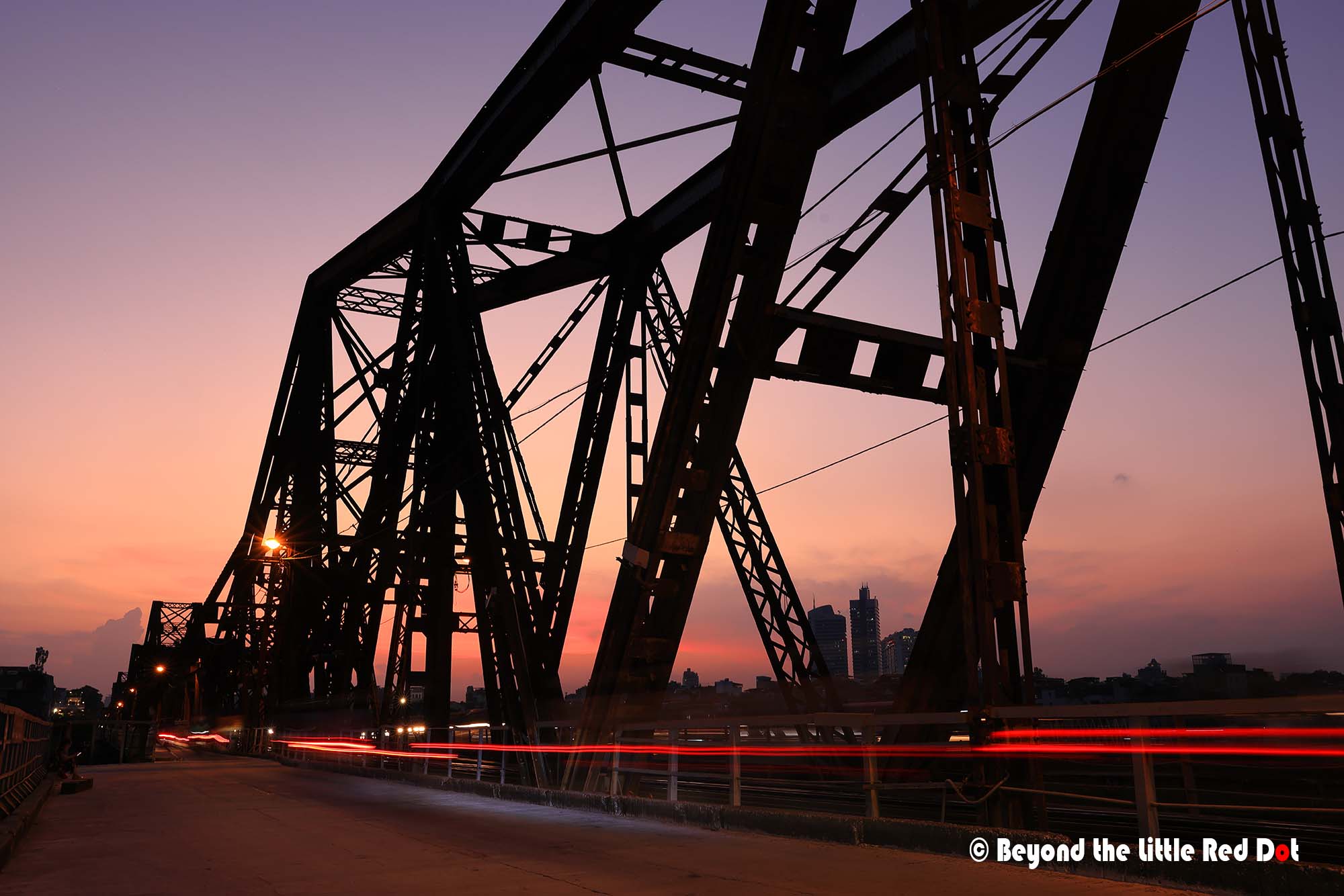
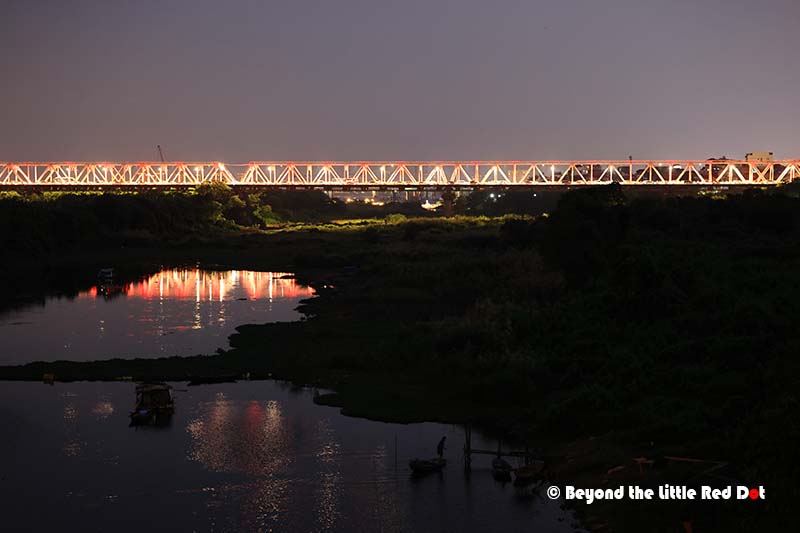
To access Long Bien Bridge safely, you can walk onto it from Long Bien train station. However, you will need to cross the narrow roadway while avoiding countless motorbikes. There are concrete paths at the side of the bridge for pedestrians and lay-bys on some sections of the bridge where you can setup for photography. The train track runs in the middle with one way lanes running on either side. But even then you will encounter motorbikes and cyclists going in the wrong direction. I guess that’s Hanoi for you.
Imperial Citadel of Thang Long: Seat of Power
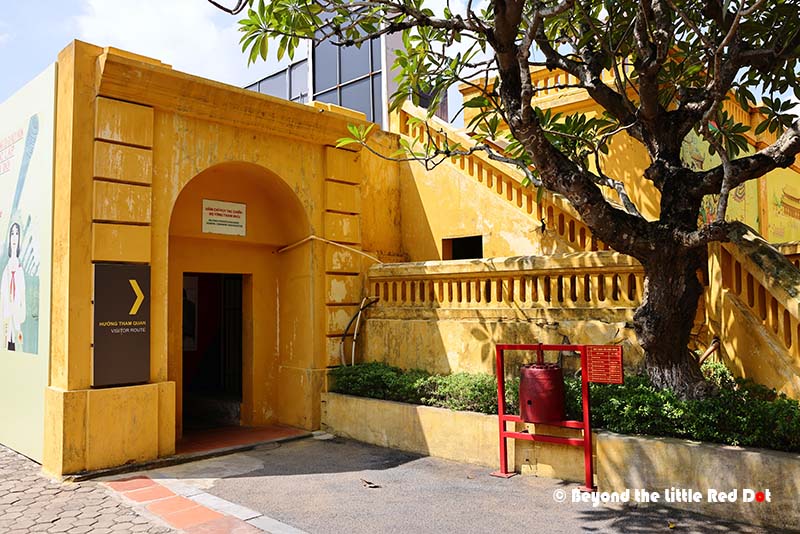
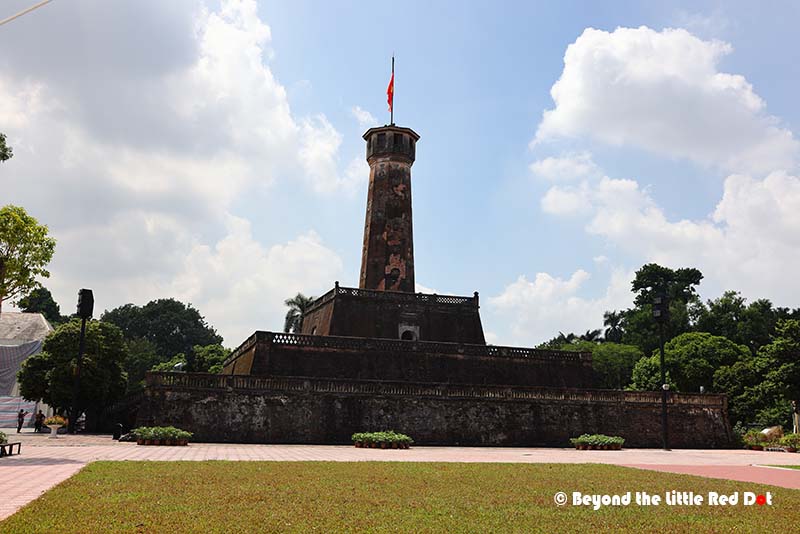
I finally took the opportunity to visit the Imperial Citadel, a UNESCO World Heritage Site and the seat of Vietnamese power for over a thousand years. The Citadel’s history dates back to 1011 when it was first built by Emperor Lý Thái Tổ of the Lý dynasty. However, most of the existing structure is more recent and dated to the extensive reconstruction of the old Imperial Citadel ordered by Gia Long in 1805.
Timing was not on my side. In September 2026 much of the complex was under restoration, and for the Mid-Autumn Festival the grounds had been turned into a large fun fair, with food stalls and performance stages filling the open spaces.
The unexpected highlight to me was underground. Beneath the citadel lies the wartime command bunker where North Vietnam’s military leadership directed operations during the Vietnam War. I can’t help comparing this bunker to the one in Ho Chi Minh City which I visited recently. While the bunker underneath the Independence Palace in Ho Chi Minh City was a sprawling complex of tunnels and rooms, this one under the Citadel is really small with just a few rooms.
The Old Quarter: From Craft Village to Souvenir Stalls
The Old Quarter grew as a cluster of guild streets, the “36 streets”, where each road was named after the trade practiced on it: Hang Bac for silver, Hang Ma for paper votives, Hang Thiec for tin. Craftsmen came from surrounding villages and set up shop together, effectively a craft village transplanted into the capital city. I had fond memories of the Old Quarter from my visit more than a decade ago and I was hoping to find that nostalgic vibe during this trip.
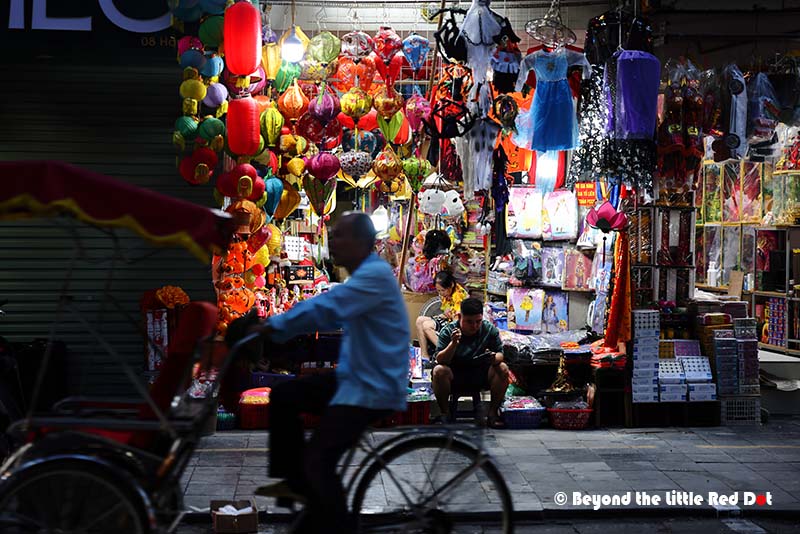
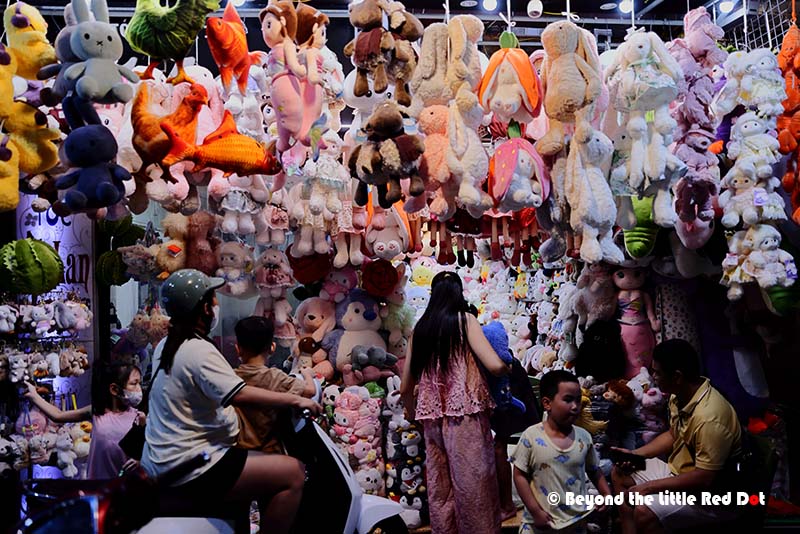
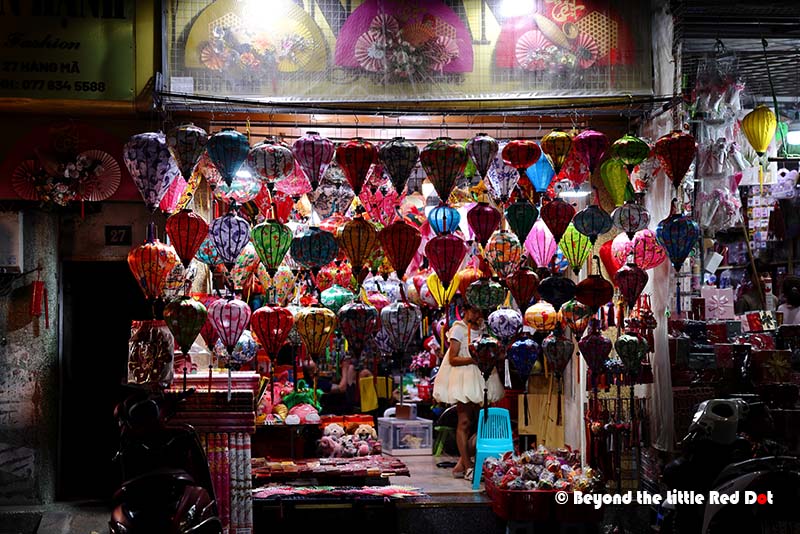
Walking through it now, that origins of the Old Quarter are harder to see. Old shops where craftsmen and women made and sold their wares are almost gone. In its place, coffee joints, bars, small restaurants, boutique hotels and clothing stores selling fake luxury brands have taken over. In the evenings, night markets set up on the pedestrianized streets selling the same souvenirs that you can find anywhere in Vietnam from Sapa to Saigon. Out of the over tourism chaos, I still managed to find some of these old shops. Defiantly they stand amidst the brightly lit modern shops catering to a social media hungry crowd. But long will they last?
Train Street: The Selfie Pilgrimage
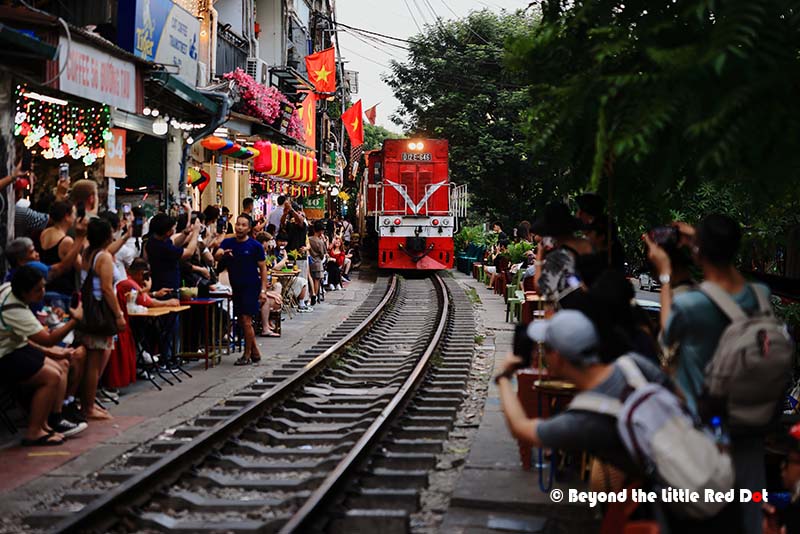
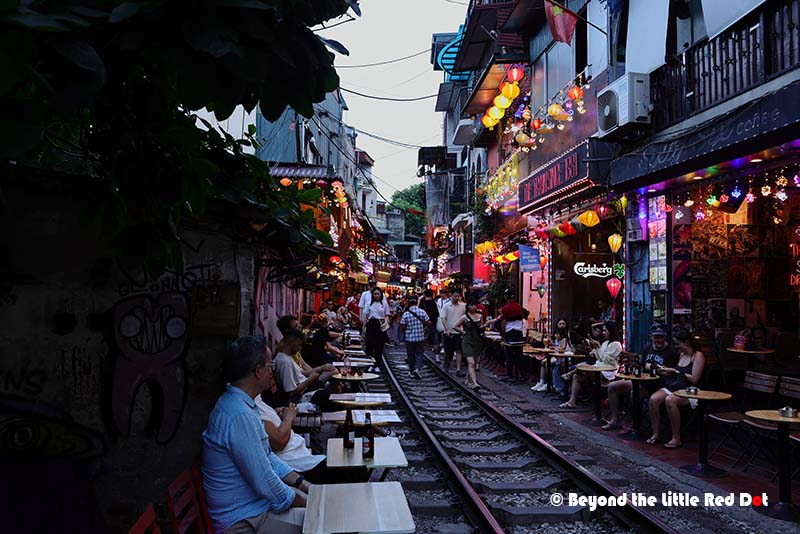
Some places you visit simply because they are on every bucket list, and Train Street is Hanoi’s definitive one. The railway line was laid during the French colonial period in the early 1900’s, and as the city grew, homes were built right up to the tracks, leaving only a narrow gap between front doors and passing trains. Residents went about daily life, a few steps from the line.
Social media turned it into an attraction in the 2010’s, cafes sprang up along the tracks, and authorities have periodically closed cafes over safety concerns when accidents happened. But when I was there, cafes were open with tables and chairs right beside the track. I guess it takes another mishap to force another round of closures.
Beyond the City: Ancient Villages and Traditional Crafts
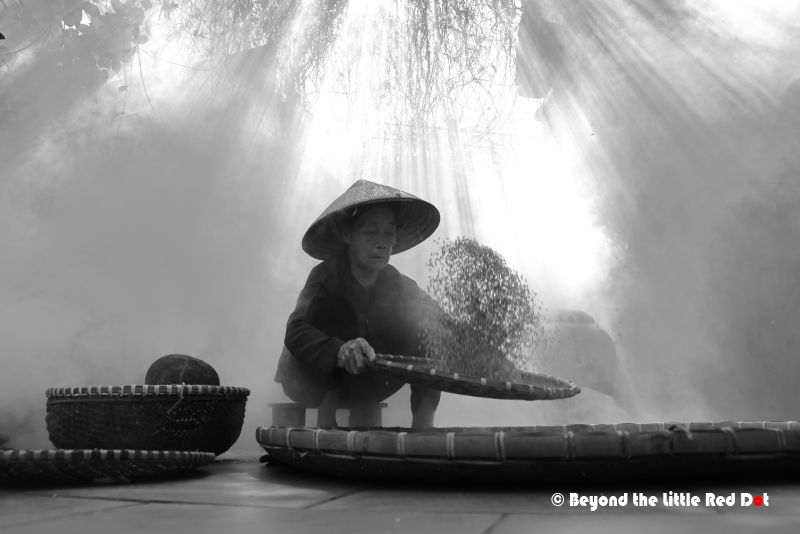
Beyond Hanoi’s city centre, villages have supplied the capital with handmade goods for centuries. Some traditional crafts have faded from everyday use, sustained now by tourism and efforts to preserve them; others still serve a practical purpose. Increasingly, these places have also found a new audience through social media, where colourful displays and carefully arranged scenes cater to the appetite for eye-catching images and the algorithms that reward them.
Duong Lam Ancient Village
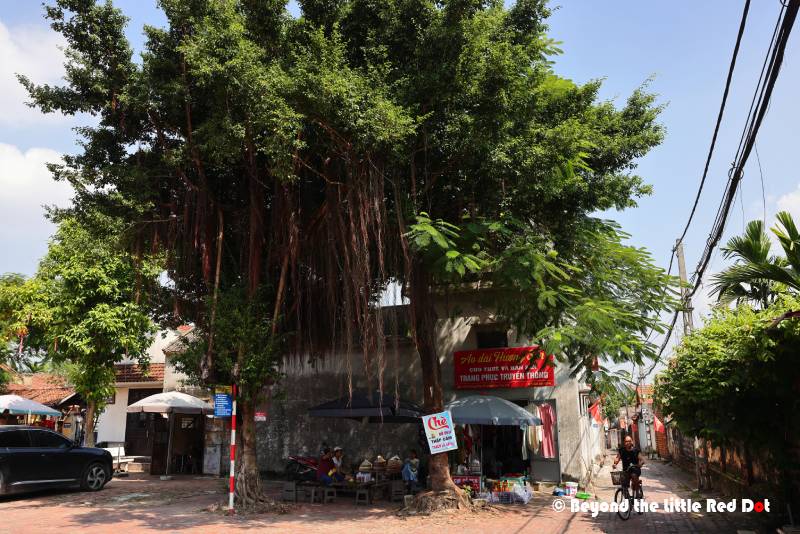
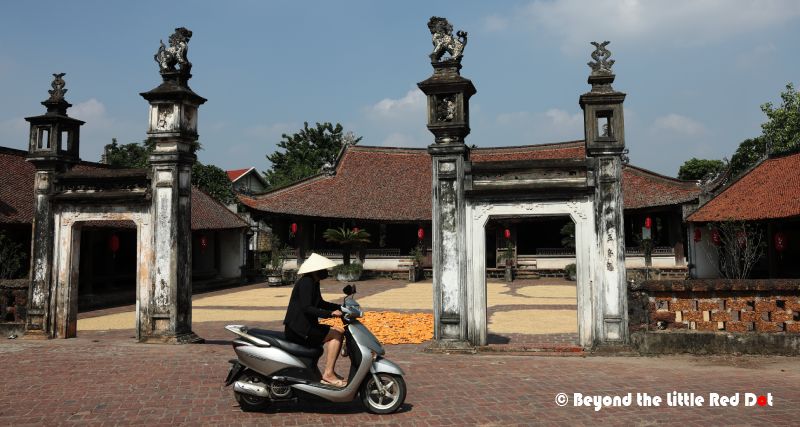
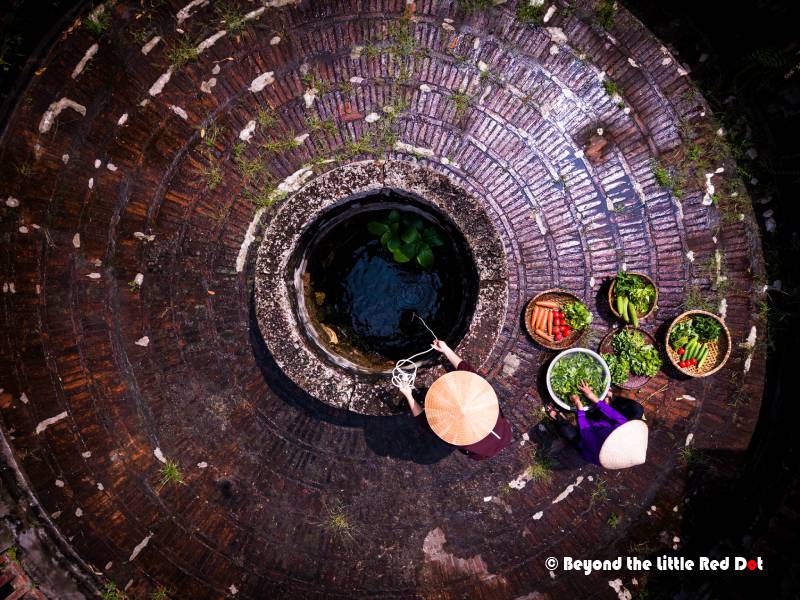
My time around Hanoi also included a visit to Duong Lam Village, located 44 km outside Hanoi’s city centre. Known for its banyan trees, wells, communal courtyards, pagodas, temples, winding village roads, and old houses with red laterite walls, it offered a different architectural setting from the shopfronts and narrow streets of the Old Quarter.
Incense Village in Long Hoa, Quang Phu Cau area
Incense is part of everyday spiritual life in Vietnam. Sticks are burnt at family ancestral altars, temples and pagodas, and especially on the first and fifteenth of each lunar month and at Tet, as offerings and a way of communicating with ancestors. The villages around Quang Phu Cau have made incense for around a century, and the drying yards of bright red sticks fanned out in the sun have become one of northern Vietnam’s most photographed scenes.
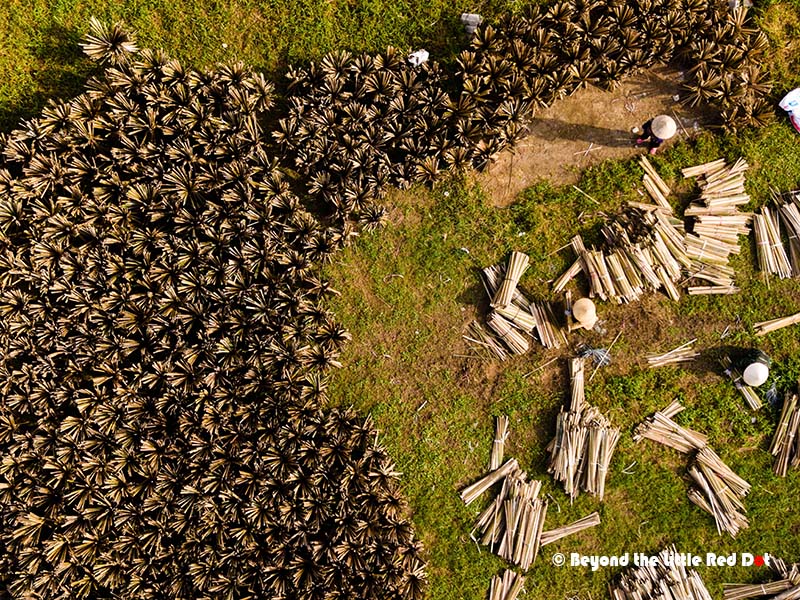
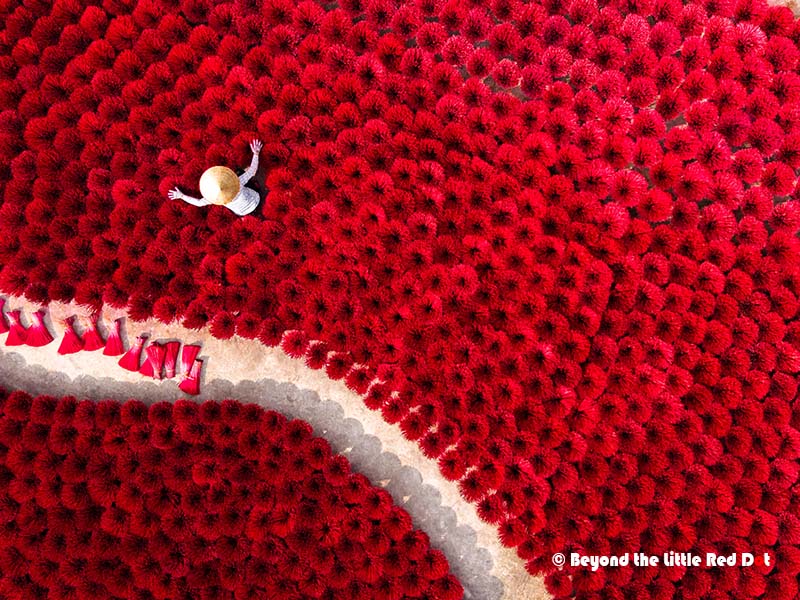
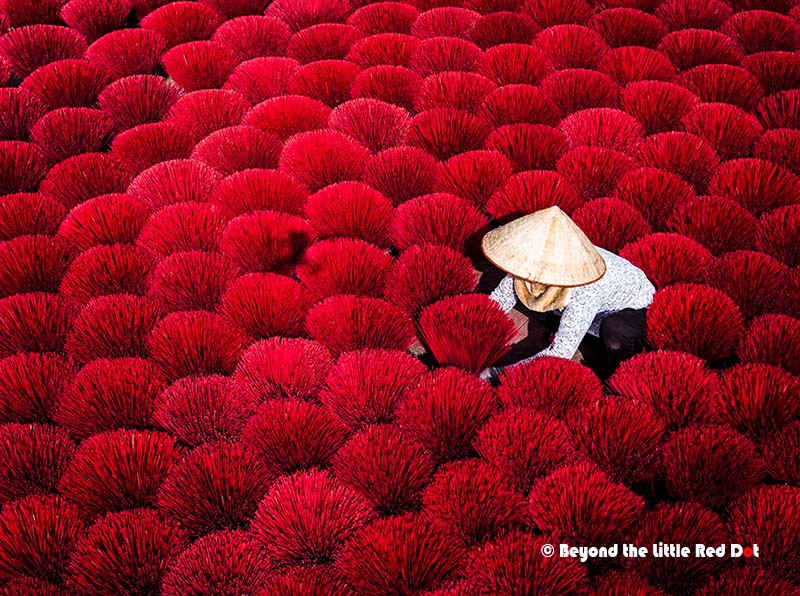
If you want a really authentic look at incense stick production then the village of Le Minh Xuan, west of Ho Chi Minh City offers a more traditional and unadulterated look. I visited Le Minh Xuan village recently and you can read about it here.
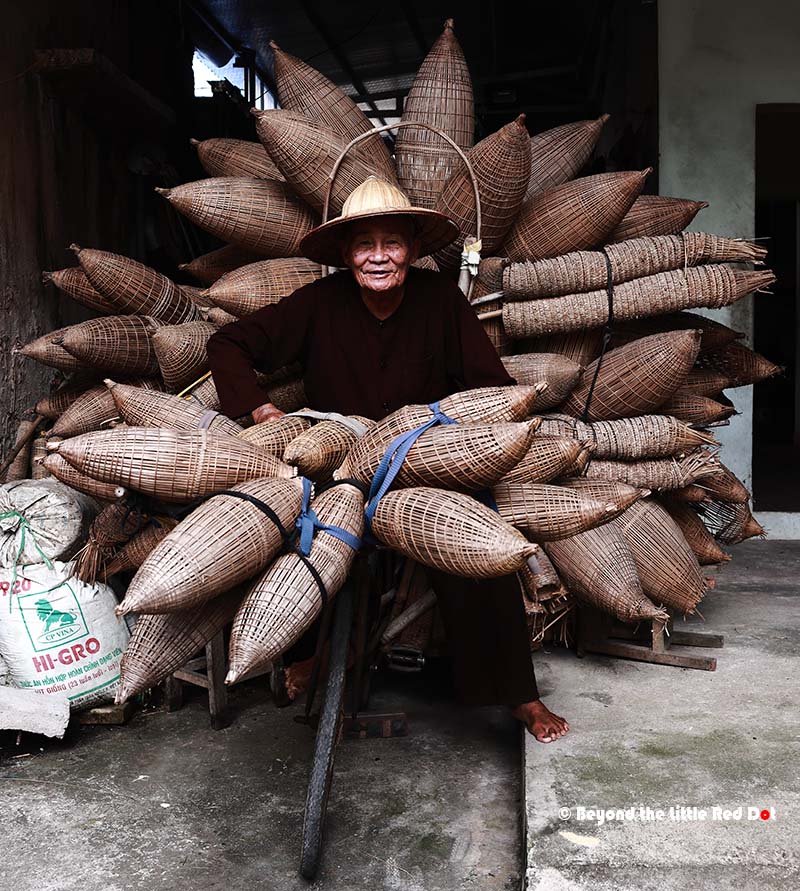
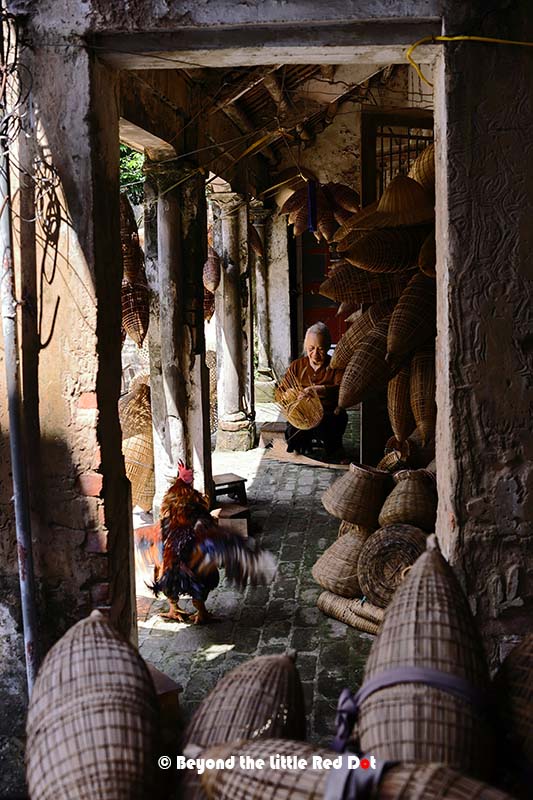
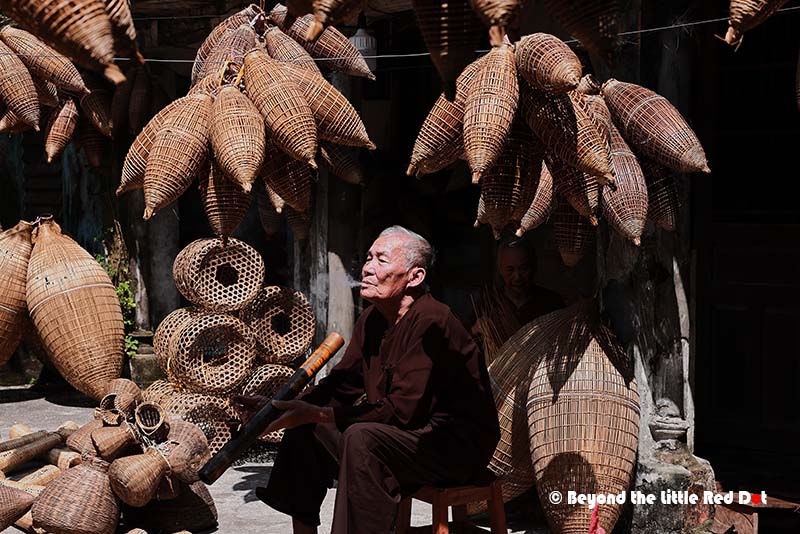
Bamboo Fish Trap Weaving in Thu Sy, Hung Yen
For centuries, farmers in the Red River Delta wove bamboo traps (such as the lờ and đó) to catch fish and shrimp in rice fields, canals and ponds, placing them in the current or at field openings. Thu Sy has been known for this craft for generations. With nets, motorised boats and aquaculture now dominant, the traps have largely fallen out of practical use, and the craft survives on a smaller scale, partly as décor and partly kept alive for visitors.
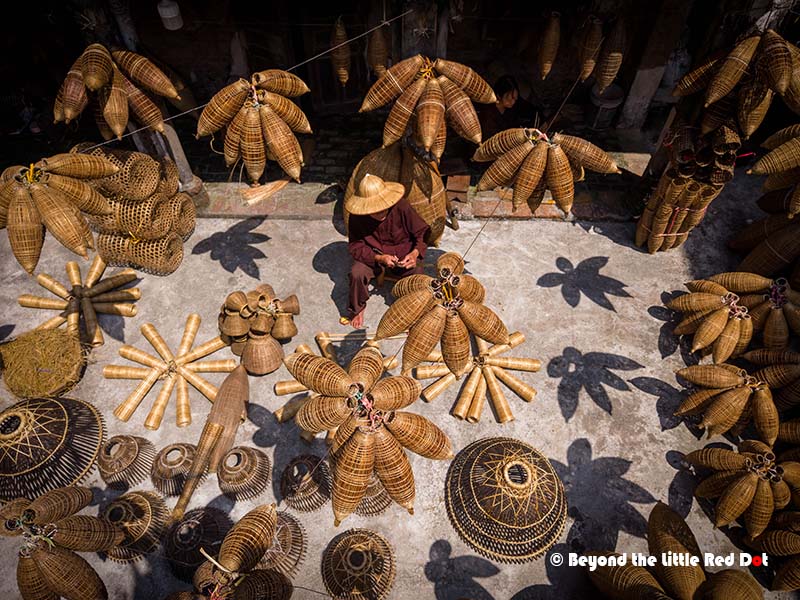
Soya Sauce Production in Ban Yen Nhan, Hung Yen
This stop felt the most authentic; rows of large clay jars where soya beans are left to ferment in the open. What is made here is tương Bần, a fermented soybean sauce made from soybeans, glutinous rice and salt. Its closer to a thick savoury paste than Chinese style soy sauce. While fish sauce dominates in the south, tương has long been a northern staple. Its used as a dip for boiled vegetables and rice cakes, and a seasoning in braised dishes, in vegetarian Buddhist cooking it often replaces fish sauce.
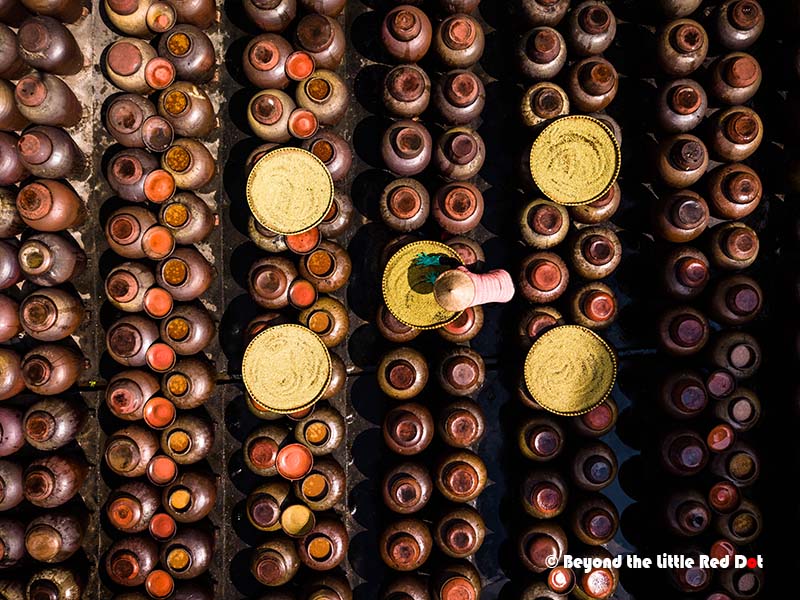
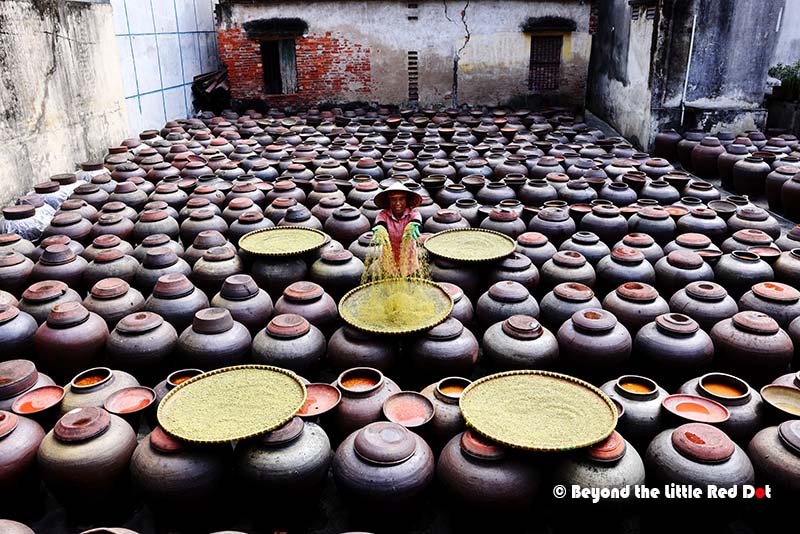
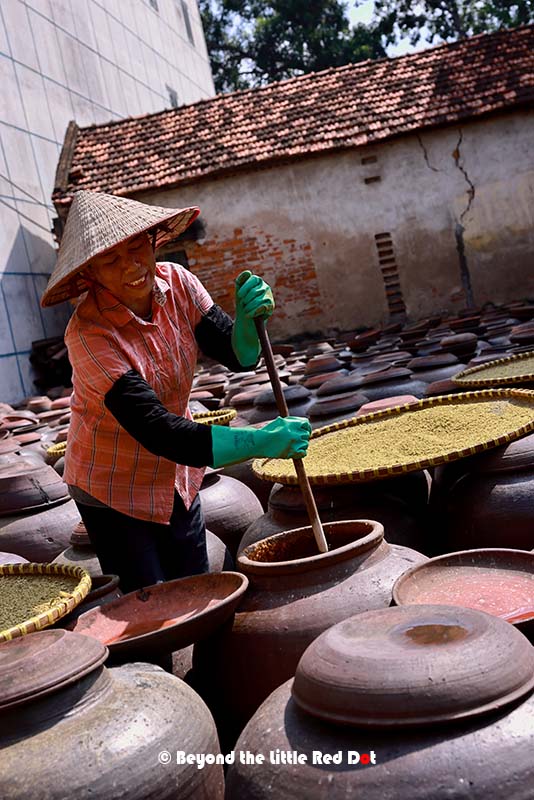
Bần is the most famous name in tương and the locals refer to it by the village’s name. So if you want soya sauce with your food, you just tell the waiter that you want some Bần.
Hanoi: Then and Now
Fifteen years after my first visit, Hanoi feels like a city caught in a time warp. The colonial era Long Bien Bridge still carries its trains and motorbikes, the Flag Tower still stands over the citadel, and somewhere beneath the tourist crowds lies a bunker where a war was once directed.
But these are increasingly fading into history. The guild streets of the Old Quarter now sell fake branded clothes instead of traditional crafts, the railway that once ran past people’s front doors has become a backdrop for selfies, and the crafts that sustained whole villages survive partly because photographers like me come looking for them.
None of this is unique to Hanoi. Every historic capital eventually turns its past into heritage, preserving what it can while modern life moves on around it. I can’t begrudge a city its progress. The Hanoi of my nostalgia was never frozen in time, and the people who live here have moved on towards the future.
Still, I’m glad I came back while some of the old rhythms are still visible: the smell of fermenting beans in clay jars, a weaver’s hands working bamboo in an old courtyard, a train squeezing between the houses. In another fifteen years, perhaps these too will be history. For now, they are still part of Hanoi, and that was reason enough to linger.


